|
I am currently a third-year MD-PhD Candidate at Albert Einstein College of Medicine advised by Dr. Sophie Molholm. My research focuses on identifying neural signatures of autism spectrum through the application of novel machine learning methods to electroencephalography (EEG) data. Prior to this, I worked as a Postbaccalaureate Fellow at the National Institutes of Health (NIAMS) under the guidance of Dr. Hanna Kim. Our research focused on applying machine learning techniques to analyze proteomic and transcriptomic datasets in juvenile dermatomyositis, a rare pediatric autoimmune disease. I also was a Summer Research Fellow at The Jackson Laboratory in Dr. Vivek Kumar's Forward Genetics, Behavior, Addiction Laboratory, where we developed a convolutional neural network to quantify gait patterns in both wildtype mice and models of neurodevelopmental disorders. I earned my B.A. in Bioinformatics, with a minor in Chemistry, from Wheaton College (MA) in 2020. In 2025, I received my M.S. in Biomedical Sciences from Albert Einstein College of Medicine following the successful completion of my Ph.D. Qualifying Examination. I currently serve as a volunteer Statistical Consultant at Albert Einstein College of Medicine and at New York Medical College, where I collaborate with Dr. Mill Etienne to support clinical research by bridging physicians, statisticians, and medical trainees. Outside of science and medicine, I enjoy playing soccer, painting, and spending time with family and friends. CV / Email / LinkedIn / Google Scholar |
|
|
|
|
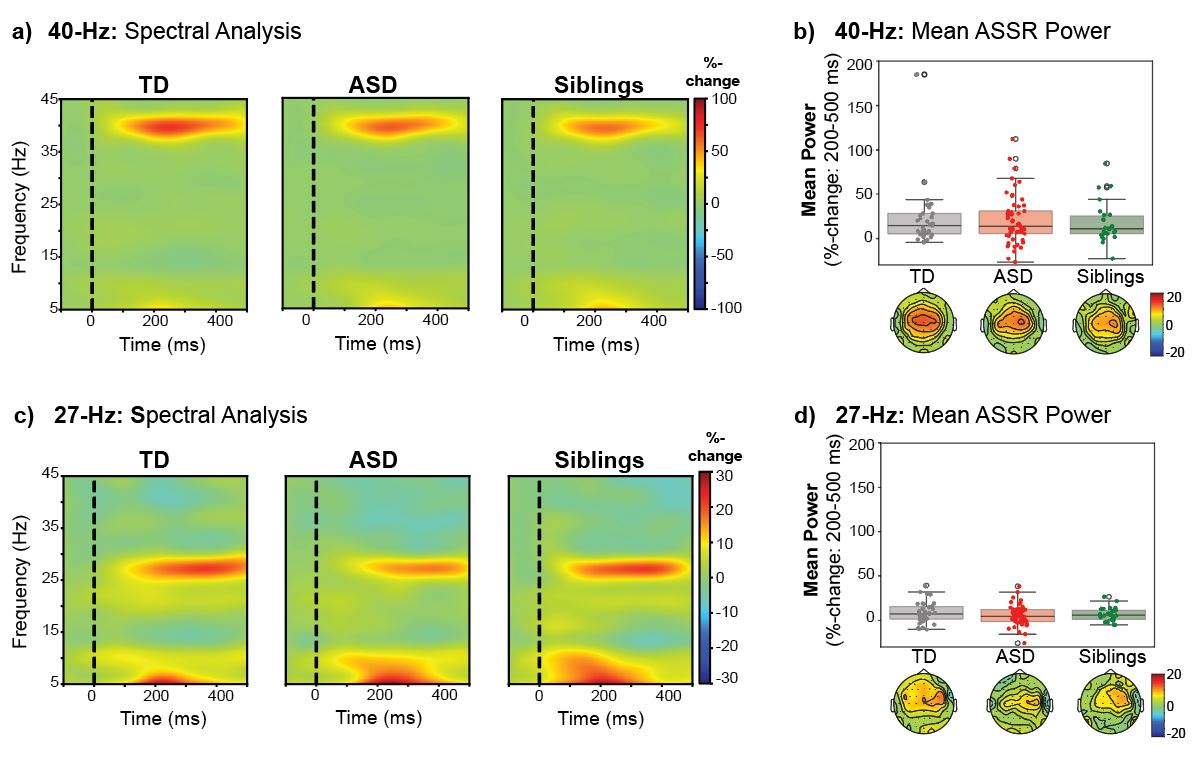
M. Darrell, T. Vanneau, D. Cregin, T. Lecaj, J.J. Foxe, S. Molholm BioRxiv, 2025 In a well-powered EEG study of auditory-steady-state-response (ASSR) in autism spectrum disorder (ASD), we observed an ASD-specific reduction in the auditory evoked response which was specific to low (<8-Hz) frequencies, potentially reflecting reduced synchronization at timescales that correspond with slower, syllabic rhythms (~4-8 Hz) occurring in natural speech. Intermediate responses in first-degree relatives suggest that this is related to genetic vulnerability for ASD and highlights its clinical relevance. These findings suggest intact sensory processing in ASD alongside possible top-down auditory feedback deficits, which may serve as heritable neurophysiological markers. |
|
|
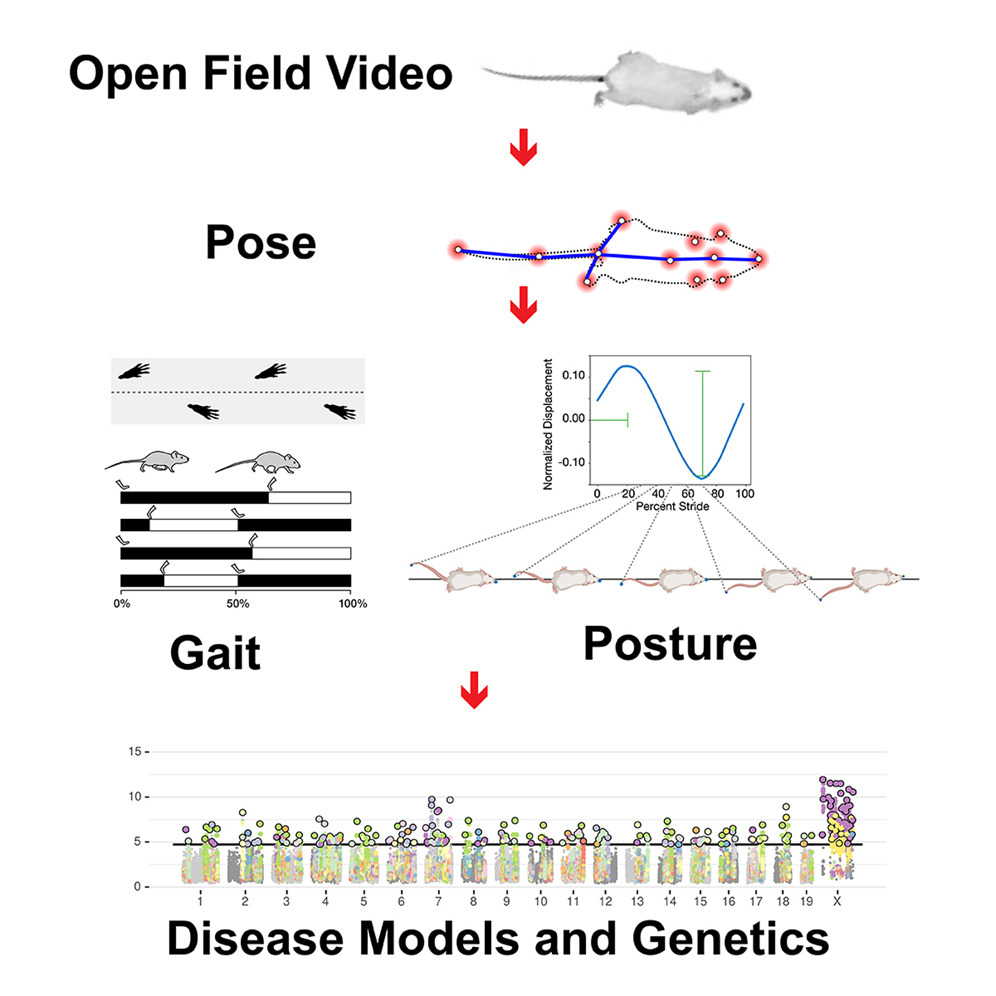
K. Sheppard, J. Gardin, G.S. Sabnis, A. Peer, M. Darrell, S. Deats, B. Geuther, C.M. Lutz, V. Kumar Cell Reports, 2022 In this work, we developed a convolutional neural network to analyze gait and posture in mice using the standard open field apparatus, enabling precise quantification across 62 strains and several models of neurodevelopmental disorders. We found that gait and posture traits are highly heritable, identified distinct movement classes, and showed that these traits are altered in autism spectrum disorder (ASD) models, suggesting a shared motor phenotype. |
|

|
A. Eligulashvili, M. Darrell, M. Gordon, W. Jerome, K.P. Fiori, S. Congdon, T.Q. Duong Scientific Reports, 2024 In a study of long-COVID patients at the Montefiore CORE Clinic, we identified that individuals with unmet health-related social needs experienced significantly worse physical, emotional, and cognitive outcomes, highlighting the critical role of social determinants in long-COVID recovery. |
|

|
A. Eligulashvili, M. Darrell, C. Miller, J. Lee, S. Congdon, J.S. Lee, K. Hsu, J. Yee, W. Hou, M. Islam, T.Q. Duong Diagnostics, 2022 In our longitudinal study of COVID-19 patients, we found that many patients experienced persistent symptoms up to five months post-infection, with prevalent lung abnormalities. |
|

|
E. Axler, A. Lu, M. Darrell, O. Vielemeyer, S. Lipner Journal of the American Academy of Dermatology, 2024 In our single-center case-control study of 502 patients undergoing nail biopsy, we found that surgical site infections were rare (<3%) and most commonly caused by skin commensals, with type II diabetes mellitus significantly associated with infection risk—findings that may inform patient counseling and infection prevention strategies in nail surgery. |
|
|
|
|
Website source taken from here. |